
How to write a good prompt: tell AI what you actually need
Four parts of useful instructions, a practical proposal comparison and simple ways to refine the answer.
You do not need a magic formula to get a good answer. Say what you want, add the relevant context and describe the result that would be useful to you.
A prompt is an instruction or question you write to an AI assistant. It can be a single sentence. For a more demanding task, however, it helps to provide a little more information so the assistant does not have to guess.
Four things worth saying
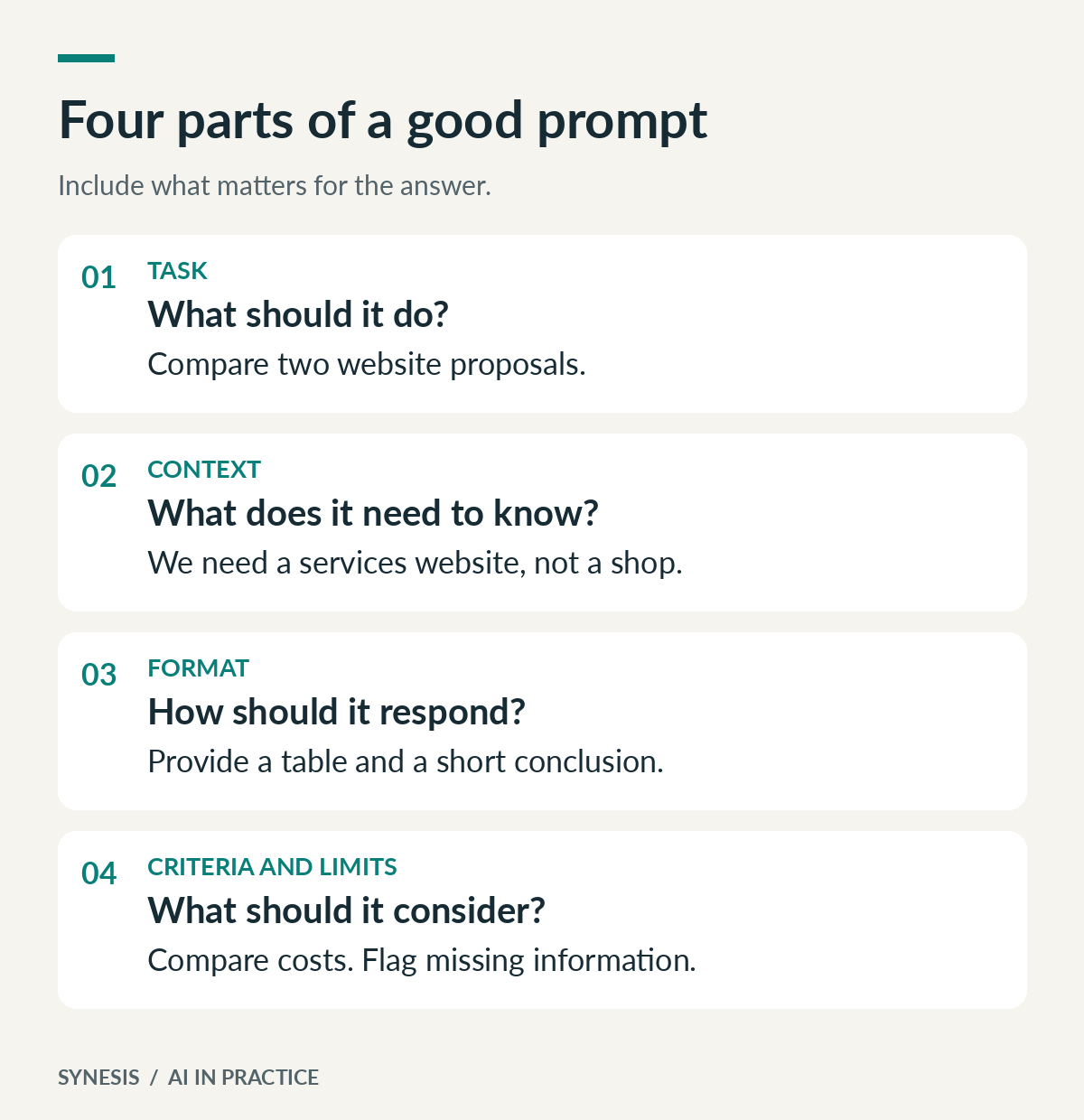
When writing instructions, use four questions as a guide: what should AI do, what does it need to know, how should it respond and what should it take into account?
Graphic: Synesis.
Imagine you are choosing a provider to build your website. Price alone does not tell you enough. Your needs, what the proposal includes and how much work the site will require later all matter too.
These are precisely the details the assistant needs to produce a useful comparison.
You do not need all four parts for a simple question. Include those that could change the answer. If you only want a word explained, there is no need to write a project brief.
From a general wish to useful instructions
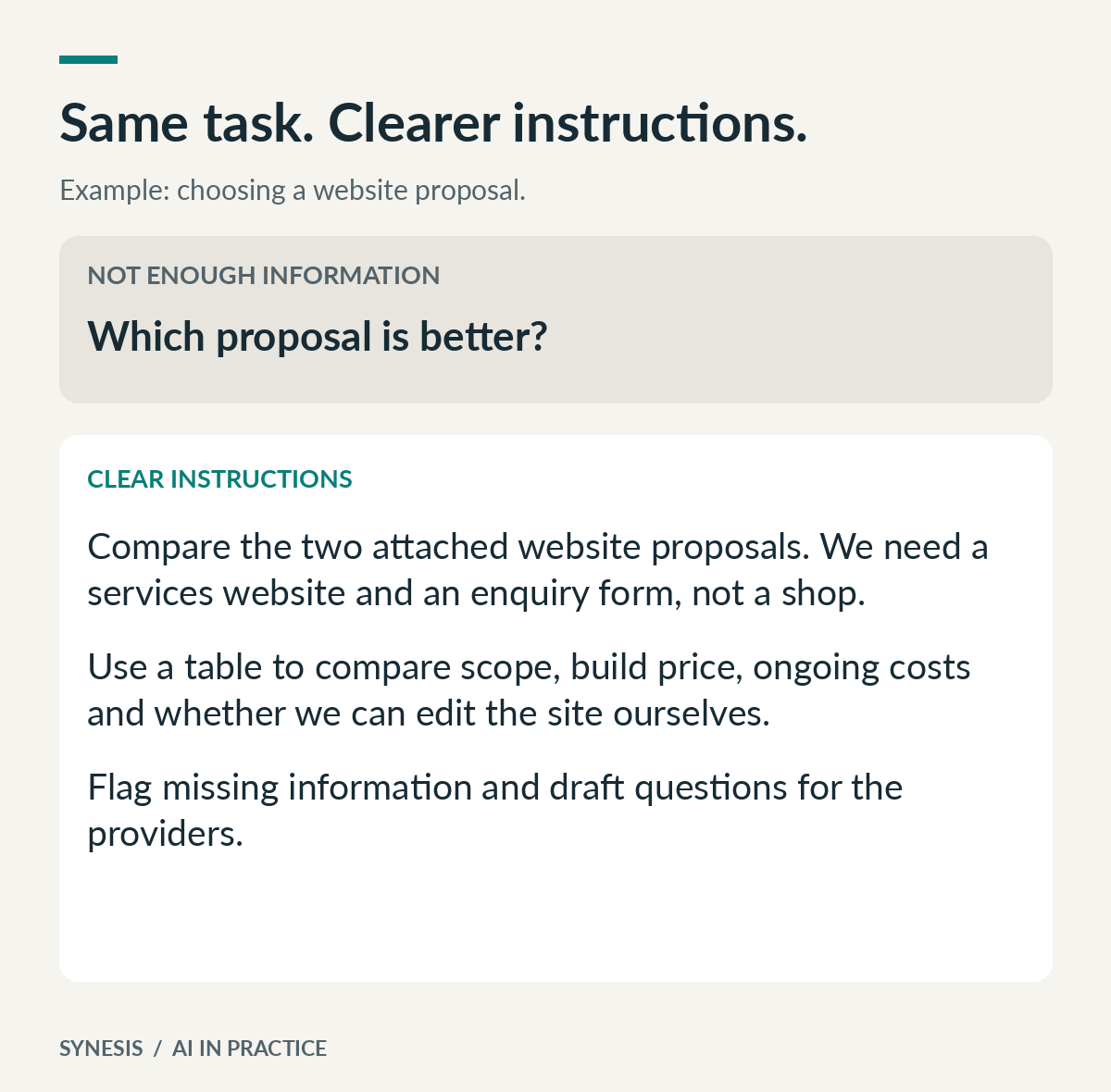
“Which proposal is better?” is an understandable question, but it leaves a lot open. Better in terms of price, included services or maintenance costs? What does the site actually need to do?
Graphic: Synesis.
The full prompt could look like this:
Compare the two attached proposals for building a website. We are a small business and need a site presenting our services with an enquiry form. We do not need an online shop.
Create a table covering what is included, the build price, ongoing costs, the delivery deadline and whether we can edit the site ourselves. Then add a short conclusion based on our needs.
Easy editing and as little maintenance hassle as possible matter to us. Use only information from the proposals. Flag missing information and prepare questions we should send to both providers before choosing.
This prompt does not simply ask for a longer answer. It explains what you need, how the assistant should compare the options and what it must not guess. Alongside the comparison, you are asking for a list of things that still need clarification.
Add the material, not just the request
If you want proposals compared, attach them. If you want text edited, include the original. If you have a particular style in mind, show a short example.
When working with documents, you can add:
For key findings, give the page number and a short excerpt. If information is missing or the text is unreadable, say so.
This makes the answer easier to check. If a proposal does not mention maintenance, that does not mean it is free. It means you need to clarify it.
Include only the material the task needs. Leave out passwords and access codes. Before sharing personal or confidential information, check whether you are allowed to share it with the tool you have chosen.
The first answer does not have to be the last
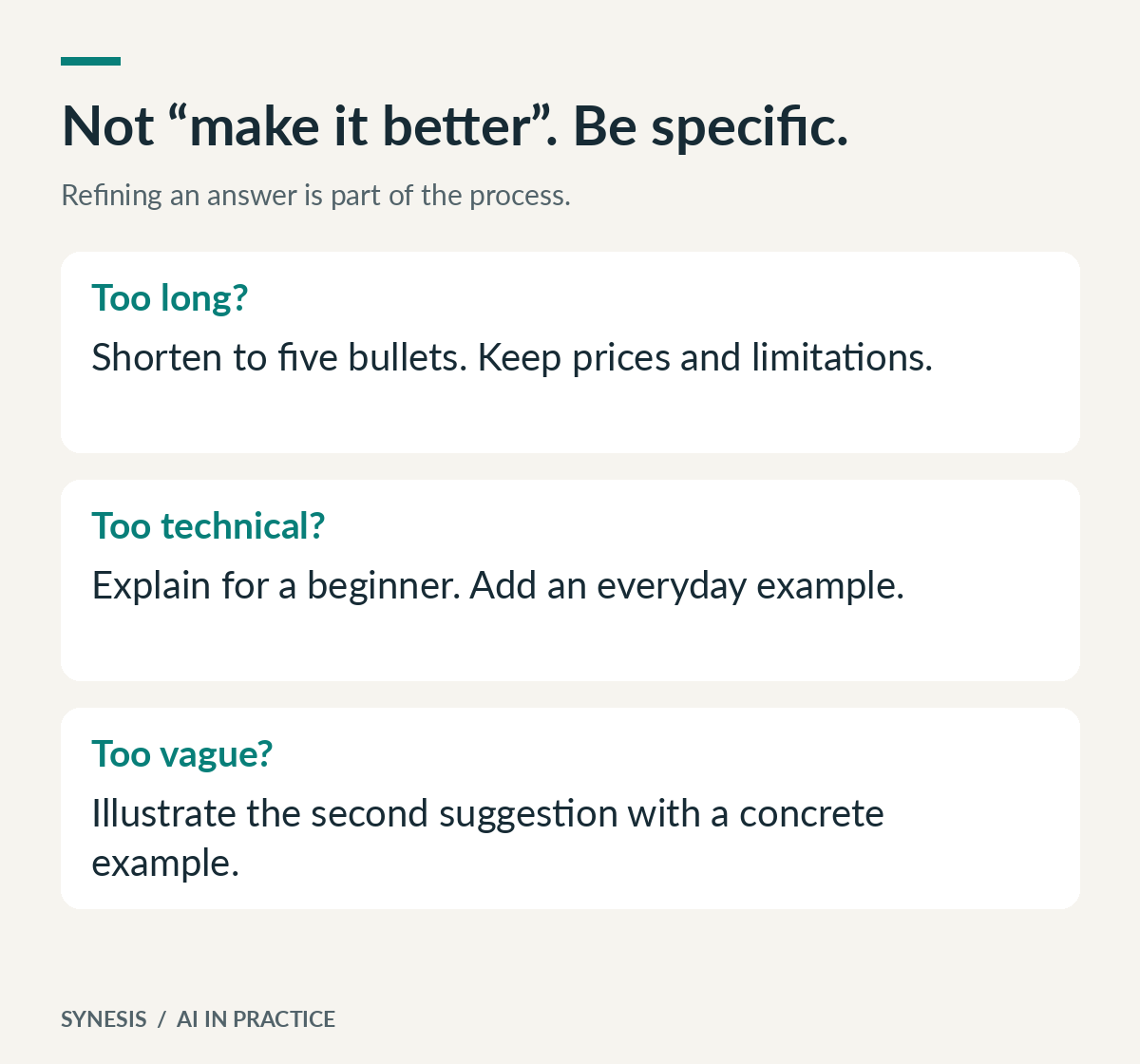
You do not have to anticipate everything. Once you see the answer, say what should stay and what you want changed.
Graphic: Synesis.
If the comparison table works for you but the conclusion is too general, there is no need to ask for everything again:
Keep the table. In the conclusion, focus on the difference in maintenance and highlight which costs we still need to check.
A specific correction is more useful than “make it better” because it clearly states what you want changed.
Clear instructions do not guarantee a correct answer
Before using the result, check the key information against the original. For proposals, this mainly means prices, included services, deadlines and terms. You also need to open any cited excerpt and check whether it actually supports the conclusion.
A good prompt is not necessarily long. But it includes the information that affects the result. Start with your goal, add the necessary material and refine the answer as you go. Rather than searching for the perfect sentence, say clearly what you need.
Synesis
Adapted from the Synesis handbook “AI in Practice”, from the chapters on prompt structure, working with source material, guiding the assistant and responsible use.